Seems like a lot. For me, it's 0 close friends, 0 regular contacts, and 0 active acquaintances. I think I simply never developed any useful social skills which would help me make and keep friends or acquaintances. I wish I had (somehow) kept in touch with at least some people I have met throughout my life. It has never been easier to stay in contact than in all of human history, but no, I had to ghost and ignore everyone and everything. After 29 revolutions around the sun, I have only now started to realize that all that vacuous superiority has led me nowhere. There is only a faint aftertaste of missing out, which sticks to me like tar. I can’t wash it off.
(Not OP, but interested to hear more)
In terms of motivation, do you know of a way to begin a sincere and genuine interest in others that doesn't have some ulterior motivations? That may sound kind of mechanical, but what I mean is roughly something like: "I don't know people, so I do not have any 'genuine interest' in them. As a result, any interest that I do have is insincere."
I chose not to have friends for several decades, which has been extremely convenient for the most part, except for tasks that require more than one person, or work-related situations. Not having to worry about offending people, remembering birthdays, messing up my own plans for the needs of others, etc. was very burdensome. However, being able to use people as a job reference, or getting leads on future opportunities from people I used to work with would also be beneficial so I can understand why people would expend the effort. However, retaining a friendship solely for those job-related purposes seems grossly manipulative because there is no sincerity in what I want from them. I do not want them I only want to extract what they can give to me.
Is it simply understood that, if you make friends with someone as an adult, it is inherently with ulterior motivations in mind, whether it be to avoid loneliness, get work-related benefits, or extract knowledge from them? As a child, I think people tended to make friends simply because they were bored and the person seemed neat. Is that why people still try to make friends with people?
Maybe you are truly asocial, but you come across as someone severely stunted emotionally if you think companionship means always extracting value out of someone.
… Do it; suck. Do it more; suck less.
“How to Make Friends and Influence People” is a great & classic book about giving people social room, focus, support, and attention with genuineness and humour (“influence” isn’t meant in a manipulative sense). Effort and attention are required, and practice, but that’s the cost of change and improvement.
“How to Make Friends and Influence People” is a salesman's guide, Dale Carnegie was an traveling salesman and the book techniques he learned making sales. The techniques you need to be a salesperson is probably not the same techniques to build lasting relationships. These tips are great for brief interactions; they are not for building relationships.
There's a couple of things that need serious caveats -
The "using the person's name" is so well known it's now clocked as exclusively a sleezy sales behavior. Don't do this - you sound like a sleezy salesman.
Asking people endless questions about themselves can really come off as a really weird integration and can be extremely off-putting if not done carefully/correctly and with grace. My mom does this, she asks hundreds of the dumbest most inane questions and she doesn't even listen to the answers to. It's so insufferable that people actively avoid her. I'm sure she read this book and thinks she's a social genius.
https://www.buzzsprout.com/2040953/episodes/17943742-how-to-...
"And also, if you think about these tips of smile and try to avoid arguments and greet somebody enthusiastically a lot of these are tips for making somebody like you immediately... They're not tips for ongoing relationships. They're like, when you show up at somebody's door, how can you make a good impression in the first five minutes and establish trust very quickly?"
Most friendships are made by doing something that puts you in proximity to the same people repeatedly. Go join (or start) a pickup sports team. Or a reading club. Or a run club. Or hang out at a bar on the same evening each week. Find something that aligns with your interests. Do it with other people. If they invite you to grab dinner or go somewhere afterwards, go along and keep talking.
The goal isn't to interview people.
If you're into music, find out what local/regional bands are in your area and where the small local venues are. Show up a little early and talk to strangers.
Rock climbing isn't for me, but my brother has made a bunch of friends at the local rock climbing gym.
Bird watching clubs are everywhere and you guys can nerd out over different camera setups.
Join a running or cycling club. I've heard the ones around here are very welcoming to people new to the sports.
Table top RPGs are fun. Your local game stores probably have one shot nights where everyone is welcome and noobs are encouraged.
Find some sort of hobby you enjoy and find others who want to nerd out over it
Make new friends with others that have underdeveloped social skills and figure it out together.
Do things in a group in some activity that won't put the spotlight directly on you and where you can observe others.
Explore therapy where odds of rejection are pretty low since you're paying them for coaching.
I think noticing how children play is very instructive, but if you don't have good social awareness that could get you in trouble. Kids haven't internalized all the baggage you and I might have about social rejection and awkwardness yet. They just confidently say "hey I like your bracelets will you tell me what they mean to you?" and if it doesn't pan out this time they play with someone else. It's the social anxiety / awkwardness that usually makes people the most uncomfortable, not the atypical interactions. Kids don't have that at all.
The one little girl is black and has very tightly curled hair. Every few weeks she has it done up differently, with different colored beads, etc. I make sure to pay attention to when it changes so that I can tell her that it looks amazing, and she gets a huge smile on her face every time. It's often the highlight of my morning, and I truly hope that she heads off to school with more spring in her step.
Adults aren't much different -- they also like to receive compliments. Give out compliments as you see fit and soon you'll have something in common to talk about.
If you're really hard up for social skills, and you like being around silly fun people and are okay acting silly yourself, I recommend taking an improv class. Any introductory improv class is basically kindergarten games to help you realize how low stakes socializing can be.
But I also realize improv isn't for everyone. In that case I recommend finding an activity you might be interested in and taking a class in it. If you aren't sure what you're interested in, good news! That means you get to take all the classes until you find one you like.
Even if there's no classes for your activity, anything that can be done out of the house and with other people probably has a community built around it. Use your interest in the activity as leverage to expose yourself to that community.
Spend some time on that website, see what you can dig up on specific skills, and then test using them in real life.
That site skews heavily towards therapists, and has a lot of woo-woo. It is clearly not THE answer.
But it is A answer. Enough to give you a framework to get started.
Besides, social interactions are one of those things that don't depend exclusively on you but also on the environment and on luck. I had better and worse periods, I doubt I could have had only "great periods". Going through periods is how you also learn and get to put some effort to change (the environment and yourself).
Taking phrases like "when you're ready" as a condescending insult or ego challenge is a stronger guarantee of pain than simply doing nothing. Your own expectations and misguided impressions are most of the pain.
There are plenty of bitter and unhappy people who got that way by being delusional. Misjudging one's own experiences and accomplishments is what it really means to "miss out".
The internet is the fast food of socialising. While it might be quick and easy, the quality is terrible. You’ll make real life long friends just being in the same room as someone regularly and chatting face to face.
IIRC, it's harder than high school to make friends at a university. It's bigger and more anonymous, and outside of student housing there's less free time where students are forced together.
My high school class wasn't too much larger than Dunbar's number (300), and you were getting mixed up with the same kids for 6 hours straight for 6 years.
My university wasn't even that large, and I think there were ~>3,000 kids in my year and plenty enough in my major that it wasn't uncommon (without deliberate effort) to have zero overlap from semester to semester.
If you're eating alone at your desk, you are signaling that you wish to be left alone.
If you're nearly a professional athlete then "how do I improve?" has very few answers that could help, and many ways that won't, but if you're a couch potato then anything is better than nothing. Any movement or club, from walking to bodyweight exercise, community hall dance group, exercise bike, treadmill, gym club spin class, climbing gym, Starting Strength, Couch to 5K running podcasts, Pilates, Yoga, Martial Arts, frisbee, volunteering to walk dogs - anything at all is an improvement.
Any book, blog, video, article, about developing social skills will have some ideas and approaches. Asking anyone - family member, counsellor, therapist, doctor, coworker, stranger in the street - for ideas could give you some. Take anything other people do and google "how do I learn that?" and try some of the suggestions.
Charisma On Command channel: https://www.youtube.com/@Charismaoncommand/videos
Harvard Business Review on enjoying smalltalk: https://www.youtube.com/watch?v=IRG-YubP1rw
Dr Burns on empathic communication: https://feelinggood.com/2016/12/12/014-the-five-secrets-of-e...
Dr Burns on stop trying to "be somebody" and dare to be Average: https://www.youtube.com/watch?v=Dz_Iw3JLCb0
Dr Burns on stopping criticising yourself with "I should XYZ" to everything you do or don't do: https://www.youtube.com/watch?v=b5Zl12LS3bg
anything on improving your fashion, haircut, body language, giving genuine compliments, making people feel happier around you, helping interactions feel fun and less like a competition you have to win, how to start conversations, how to keep conversations going, how jokes work, some jokes to memorise.
Imagine all the "how do I learn programming?" posts on the internet, if you want to make a 100fps 3D game in C++ there's only a few useful ideas, if you want to "learn programming" it does not matter what language, computer, IDE, editor, book, article, video, tutorial, you start with. Anything is more progress than doing nothing.
It maybe that you most definitely want it. However for me "missing out" hasn't make life any worse.
People have had "weird" or out of the norm nicknames forever. Where do you think nicknames come from?
But yeah I only have like 5 real friends and then maybe 10 acquaintances eg. work
That kind of self insight is valuable.
So maybe, ya know, stop pretending on the internet that you have things figured out?
It's not too late, but it might need more effort than if earlier.
You might need some hobbies which are more social, like volunteering. It's very easy to fall into work -> hacking at stuff -> sleep cycle, but you can't live inside your own head for the rest of your days.
I'm older and I've lived through the analog era, before people had cell phones or internet. Facebook wasn't around when I graduated from college, so most contacts from before that withered away -- especially if you ended up living in a different state or city.
It is sometimes heart wrenching to hear about people from your past, knowing that you didn't keep in touch. A girl that I went to elementary school with, always kind of an odd girl (but in a good way), developed leukemia in her 30s and passed away in 2019. I didn't know for seven years. Seven! I went through her Facebook page and it was a roller-coaster of emotions, playing her life backward as she chronicled her condition worsening, periods of hope, all the way back to when she was saying that she had some kind of bug and felt awful.
She was a good friend to me in elementary school, but we ended up going to different high schools and different directions after that. I feel bad that we didn't keep in touch, and that I was completely unaware of her suffering.
I can't wallow in this, though, and this is where I'm attempting (maybe poorly) to make a connection to your situation. You can't change the past, but you can start making meaningful attempts to forge new relationships and to rekindle old ones. Those people that you never kept in touch with? Reach out to them, if only to say "Hi". Reach out because you want to do it, and not because you need something.
How many days will you sit there and think "why doesn't anyone reach out to me?" when you, yourself, are not also making the effort to do so?
Sure you can. There are various paths to it, some outlined in sibling comments, and here’s another one: Pick up the phone and call or text some of those people you wish you had kept in contact with. Don’t have their contacts anymore? Ask someone who might or find them on social media. What do you say to them? “Hey, I was recently thinking of <that time you did something together> and felt like reaching out. How have you been doing?”.
Maybe beforehand “collect” some relevant events which have happened to your life since you last met, so you have something at the ready to keep the conversation going if you need. I’m not saying rehearse it, just have them in mind. If you need some small talk tips, see this short video.
Relationships are inherently transactional. You won't want to spend time with someone if you don't get something out of it, barring certain unconditional loves like your immediate family. When making new friends, proxies like attractiveness and social standing are how people judge if someone is likely to add value to their lives or not.
So yes, unfortunately, if you talk to someone and you're just some small quiet guy with no interesting characteristics, you'll probably be written off before you get a chance to develop a friendship with them. Whereas if they see you have muscles, or know you're successful in your career, or know you have other friends, they'll be more likely to assume you might be worth getting to know.
Things like working out, dressing well, learning to speak well, etc. all help. However, there is an alternative shortcut to building close friendships - forced interaction. When you're stuck sitting next to someone in class for a year, you don't have the privilege of swapping that person out for someone who seems cooler, you just have to get to know them. When you're stationed in the military with a squad you don't get to swap that squad out for people you think you might like more, you just bond with them. But there are few opportunities like that in normal life, you have to seek them out. Go on a 2 week long canoeing expedition, join a start-up incubator with a small team, play an MMO at a competitive level where you have scheduled runs and are in voice chat. Do stuff that forces you to interact with people for a long time and puts you in environments where you can't just leave and seek out people more like you.
> barring certain unconditional loves like your immediate family.
I’d argue your immediately family isn’t deserving of unconditional love. Unfortunately, familial relationships can be much more toxic than other relationships precisely because you feel an obligation to make a bigger effort to not sever them. But if they’re bad and you’ve done a real effort towards reconciliation and failed, you should cut them out for your own sanity.
I have friends for whom I care much more than family.
> Whereas if they see you have muscles, (…) dressing well
Careful, as those are not universal. Placing too much emphasis on physical appearance can have the opposite effect and make other people preemptively judge you negatively.
And it's also true that certain sub-cultures will judge you differently. Like if you're all beefed up and dressed in a suit, you're probably not getting an invite to Dungeons and Dragons club. I would say in general following your country's norms for attractiveness will result in more social success but if you present yourself inauthentically you certainly can end up attracting people you actually don't want to associate with.
Yup. To me, a muscled/fitness-type guy who seems to care too much about his appearance is a turn-off, I'd be unlikely to seek friendship. It signals to me "we share very little in common". Which, to be clear, is a prejudice, but if we're discussing physical appearance, that's what this is about.
Also, something similar happens with (some, not all!) guys being afraid to approach very attractive women because they seem out of their league. And the same must happen to some women.
The cringe is rough but at some point the cringe becomes so bad it loops back around to me just feeling nostalgic and grateful that there's proof I was able to do things, create, be silly, whatever without worrying about appearances so much.
Also, I figure if I ever become a megalomaniac then old youtube videos of my teenage self doing parkour should go pretty far in humbling me (although, honestly, I think 13 year old me was way cooler than I am now, so I guess it could backfire).
This was very unexpected to me because in my mind the changes only happened as I became a young adult. The evidence of these decades of logs shows the change continued to happen as an adult.
Weirdly glad to hear I am not the only one effectively having lost them.
I think me and most of my friends were using MSN all up until the "Windows Live" rename, then I think we started using Ventrilo instead, but looking up the year that was around 2005 sometime.
Ultimately, guess it wouldn't be impossible that their MSN logs were encrypted with Bitlocker after all :) I think I started using TrueCrypt around that same time, seems more likely, I think Bitlocker for many, many years was basically only used by enterprises.
>Armed with GDPR and data access laws, I got myself archives with all my messages, reactions, and social graphs.
I decided to look through old IRC chats, and I honestly couldn't for sure say who maybe 30% of the people are just based on their nicknames. Nicknames I hadn't seen in 20 years. So I decided to feed all the raw chats into a LLM, and see if the model could string together names and nicknames. It managed to do surprisingly well! Many of the chats were not personal chats, but from the channels. My most active channels were local groups from my small town, so the names would naturally be named there, but I couldn't be bothered with sifting through the vast amounts of chats/text.
I then noticed that in the mid 2000s, MSN Messenger really took off, so most my chats were done there. Or ICQ if I were chatting with people from the US.
Then, around 2009/2010 Facebook became the standard (though it seems like my account was created in 2007), and most chats are via messenger.
A data breach on an IM app would be one of the most devastating leaks ever. And there’s just not that many legitimate use cases for keeping all history. If someone tells you something important you can make the effort to move it to their contact or notes in your phone.
Now, if the threat scenario is someone implanting a compromised version of the IM app on every device out there, and siphoning data from the device itself, then it's a completely different scenario.
[1] although this could be intercepted by an attacker compromising the IM servers, if the app is not distributed/P2P
You or the other person could lose the device and someone could use your PIN/password (something as simple as shoulder surfing while you use it). There could also be a leak in whatever cloud service you're using, or the data could get subpoenaed because of some dumb law that gets passed, some rogue employee, etc. It's a huge liability no matter how you look at it.
But for normal people, the biggest risk is companies using their chats to train models / dispatch ads etc to which the only solution is E2EE.
I also use the Note to Self which is built into Signal and appears just like any other conversation. I use that for temporary stuff like addresses and keep it clean.
For removing noise you might want to look into TF-IDF instead of the manual method described in the post that I didn't understand. It basically looks for words common across the whole corpus as noise or ones that appear within a specific chat much higher than the whole dataset as interesting.
You can also do some fun stuff by finding phrases used asymmetrically eg more by one person in the convo than the other, or over time.
Wordclouds per person are also fun!
TF-IDF was the first thing I tried - it works great for stopwords but it doesn't handle cross-language bleed of filler words well, and the short life-event messages ("he died", etc) use common words and get aggressively down-weighted.
I had some asymmetry analysis when looking at directional sentiment and per-person question rates - that's fun indeed!
I also went with the Jaccard convergence and the endearment categories instead of wordclouds, so that I could see how word choices are changing across time.
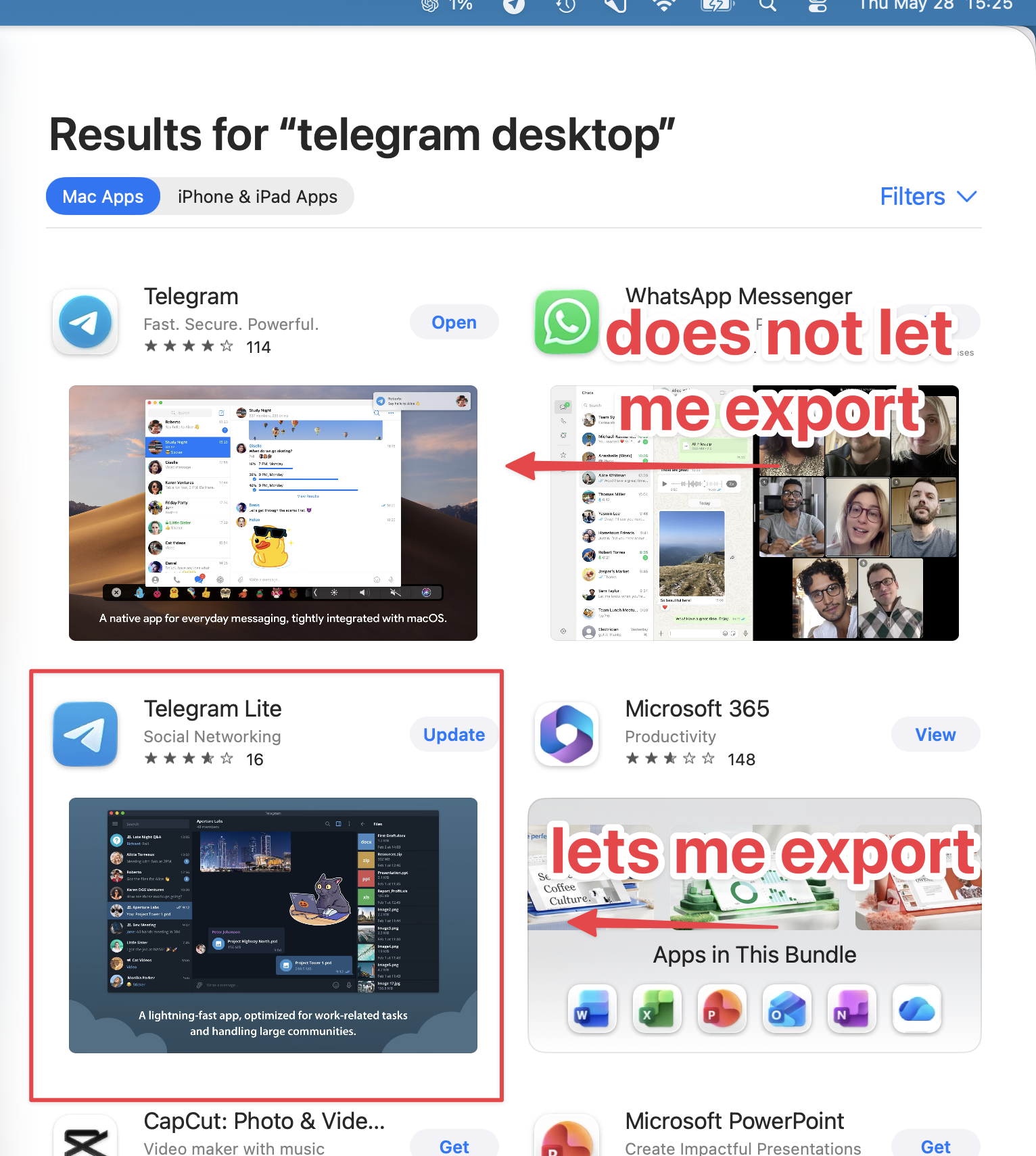
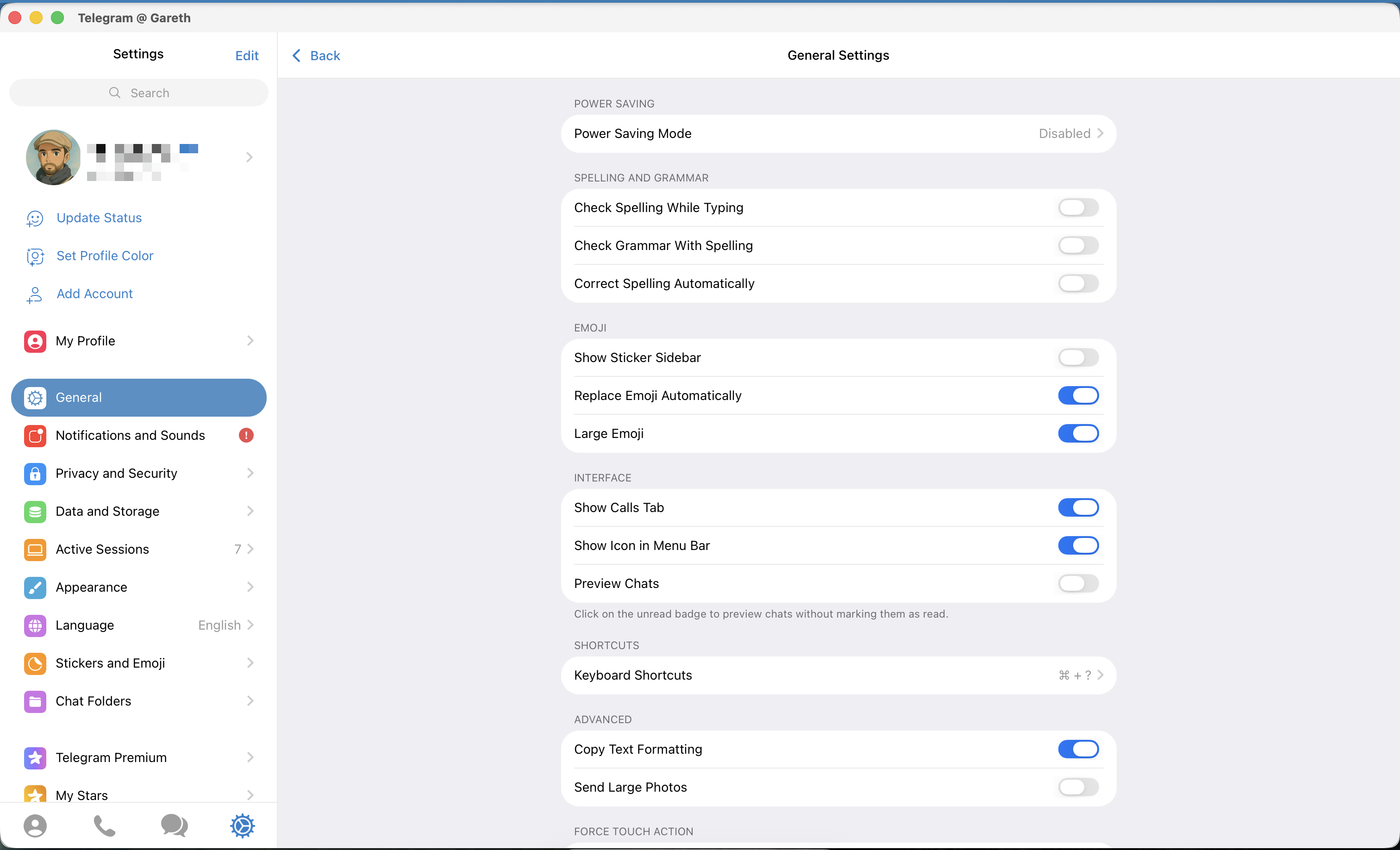
These are the two options I see to download https://i.ritzastatic.com/static/1e133ef5057a949b7ddd92e5668...
And the 'main' one that I usually use doesn't have export settings that I can find
https://i.ritzastatic.com/static/18db23448a373338766bf419fa0...
Also email sentiment too how fun
Ultimately you run the risk of having a computer program redefine who you are as a human and that begs the question of whether you’re really you after that?
I find text messages impersonal and it also takes longer to communicate clearly what we need. There is so much lost. Even chats and emails for work are at risk of creating misunderstanding, especially because English is not the native language of most of my coworkers, all these adds to result in pretty low quality communication.
Don't think there is a way to recover that.. right?